
Case File #002
Why does my cat lick me?
A suspiciously common habit that may point to boredom, anxiety, upset stomach, leftover food smells or just simple dog logic.
📝 Case Summary
Case File #002: The case of the kissing cat
Pet: Cat
Category: Behavior
Urgency Level: Usually Low
Main Suspects: affection, grooming, taste, lick before the bite
Vet Needed?: Sometimes
🔎 Quick Answer
In most cases, your cat licks you because they feel bonded to you, want your attention, like the taste of your skin, or are treating you like part of their trusted social circle. Cat licking can also be connected to stress, overstimulation, or, less commonly, a medical or behavioral issue.
Full Case File 📂
Why Does My Cat Lick Me? 8 Clues Behind This Feline Mystery
Your cat hops into your lap, settles in with a purr, and then suddenly starts licking your hand like you are the final piece of evidence in a tuna-scented crime scene.
So, what is going on?
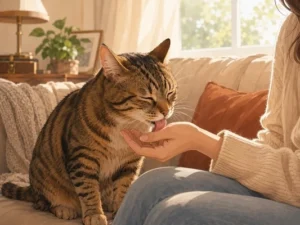
In most cases, your cat licks you because they feel bonded to you, want your attention, like the taste of your skin, or are treating you like part of their trusted social circle. Cat licking can also be connected to stress, overstimulation, or, less commonly, a medical or behavioral issue. Occasional licking is usually normal, but sudden, intense, or excessive licking deserves a closer look. Cornell Feline Health Center notes that licking is natural for cats, but it can sometimes cross into obsessive behavior, especially when it becomes excessive in frequency or duration. (Cornell Vet College)
Consider this your official case file on the sandpaper kiss.
Is It Normal for Cats to Lick People?
Yes, it is usually normal for cats to lick people.
Cats use licking for more than cleaning. Grooming can help cats bond, soothe themselves, explore scents and tastes, and communicate with trusted companions. PetMD lists affection, attention-seeking, anxiety, and medical issues among the possible reasons a cat may lick their person. (PetMD)
The key clue is context.
A few licks while your cat is curled up and relaxed? Probably normal.
A sudden licking habit that happens constantly, comes with biting, or appears alongside hair loss, hiding, appetite changes, or irritated skin? That is a bigger mystery, and your veterinarian should join the investigation.
8 Reasons Your Cat Licks You
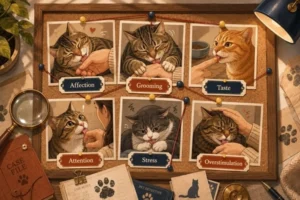
1. Your Cat Is Grooming You Like Family
Cats groom themselves to keep clean, but they may also groom animals and people they feel close to. When your cat licks your hand, arm, hair, or face, they may be treating you like part of their trusted inner circle.
This does not necessarily mean your cat thinks you are another cat. Rather, licking can be part of a social bonding routine. PetMD notes that cats may lick other animals and humans as a way to bond. (PetMD)
In detective terms, this clue says: you have been accepted into the fuzzy little fellowship.
2. Your Cat Is Showing Affection
The affectionate lick is one of the coziest suspects in the case.
Some cats lick their people when they are relaxed, purring, kneading, or cuddling. In that moment, licking may be your cat’s version of “you are safe, familiar, and mine.” It may also resemble the grooming cats do with other cats they trust.
PetMD’s guidance on signs of feline affection says cats may lick their people when trust has been built, and it compares this behavior to grooming between feline companions. (PetMD)
Still, cats are individuals. Some are enthusiastic face-lickers. Others would rather express devotion by sitting near you and judging your laundry-folding technique.
3. Your Skin Tastes Interesting
Your cat may not be solving an emotional mystery at all. They may simply be investigating a flavor.
Human skin can taste salty from sweat. Your hands may also carry traces of food, soap, lotion, shampoo, or household scents. To a cat, your fingers may read like a fascinating scent report: “Evidence suggests chicken, moisturizer, and suspicious crumbs.”
Be careful with this one. Do not let your cat lick skin that has topical medications, pain creams, essential oils, medicated lotions, or flea and tick products on it. Some ingredients that are safe for humans can be dangerous if pets ingest them.
4. Your Cat Wants Attention
Cats are clever little detectives, and they are excellent at studying cause and effect.
Your cat may learn that licking gets a reaction. Maybe you pet them, talk to them, laugh, feed them, or move your arm. Even a dramatic “Excuse me, tiny goblin, please stop licking my elbow” can count as attention.
If the licking tends to happen when you are working, sleeping, eating, or looking at your phone, your cat may be filing a formal complaint: Human attention missing. Immediate response required.
5. Your Cat Is Marking You With Scent
Cats live in a scent-rich world. They gather information through smell, and they use scent to make places, objects, and companions feel familiar.
Licking may help your cat mix their scent with yours. This can be part of creating a shared “group scent,” especially in a bonded home. It is less like territorial conquest and more like your cat stamping the case file: Known human. Approved. Belongs here.
6. Your Cat Is Self-Soothing
Some cats lick when they feel uncertain, anxious, bored, or overstimulated. Licking can be calming, which means your cat may use it when they need comfort.
This does not mean every lick is a sign of stress. But if licking becomes frequent, intense, repetitive, or hard to interrupt, stress may be one of the suspects. VCA Hospitals notes that overgrooming in cats can occur because of anxiety or obsessive-compulsive behaviors. (Vca)
Look for supporting clues: hiding, clinginess, changes in appetite, litter box changes, increased vocalizing, aggression, or overgrooming their own body.
7. Your Cat Is Overstimulated
Now we arrive at the infamous “lick, lick, chomp” case.
Some cats lick and then bite when they become overstimulated during petting or cuddling. The bite may be light, sudden, or surprising. It does not always mean aggression. It may mean your cat’s nervous system has hit the “too much” button.
Watch for clues before the bite:
- Tail twitching or thumping
- Skin rippling along the back
- Ears turning sideways or backward
- Sudden stillness
- Dilated pupils
- Head whipping toward your hand
- A tense body
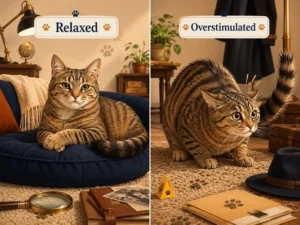
When you see those signs, pause the petting session. Give your cat space before the tiny detective escalates the case.
8. Something Medical or Behavioral May Be Going On
Most cat licking is harmless, but excessive licking can be a red flag.
Cornell Feline Health Center warns that when licking seems excessive in frequency or duration, cat parents should not ignore it. (Cornell Vet College) VCA also notes that compulsive behaviors in cats can include excessive grooming, and anxiety-related overgrooming may cause hair thinning on the sides, belly, inner legs, or back. (Vca)
Call your veterinarian if your cat’s licking is sudden, intense, difficult to interrupt, or paired with other symptoms. Possible underlying issues can include stress, pain, allergies, parasites, skin irritation, nausea, or compulsive behavior.
The mystery may be behavioral. It may be medical. Either way, your vet has the proper magnifying glass.
Why Does My Cat Lick My Face?
Your cat may lick your face because they are showing affection, grooming you, seeking attention, or investigating interesting smells from food, skincare, or sweat.
Face licking can feel sweet, but it is smart to set boundaries. Avoid letting your cat lick your mouth, eyes, nose, broken skin, or any area with skincare products or medication. Pet saliva can carry bacteria, and the risk is higher for infants, older adults, pregnant people, immunocompromised people, and people with certain medical conditions or devices. A Washington Post health column reported that serious illness from pet licking is rare, but experts recommend simple precautions like washing after licking and preventing pets from licking open wounds or medical equipment. (The Washington Post)
So yes, your cat’s face lick may be affectionate. But your mouth does not need to become part of the investigation.
Why Does My Cat Lick My Hands or Fingers?
Hands are prime evidence.
Your hands feed your cat, pet your cat, open treat bags, touch toys, prepare food, and carry a constantly changing mix of scents. If your cat licks your fingers, they may be responding to salt, food residue, lotion, soap, or the simple fact that hands are where many good things happen.
A hand lick can mean:
- “You taste interesting.”
- “Pet me.”
- “Feed me.”
- “I trust you.”
- “You smell suspiciously like lunch.”
Check whether the licking happens after meals, after cooking, after applying lotion, or during cuddle time. The timing usually reveals the culprit.
Why Does My Cat Lick My Hair?
Hair licking often looks hilariously personal, as if your cat has appointed themselves chief stylist of the household.
Your cat may lick your hair because it smells interesting, because they are grooming you, or because they find the texture appealing. Some cats are especially interested in shampoo, conditioner, hair oils, or styling products.
Do not let your cat lick hair with products in it. Some ingredients can upset your cat’s stomach or be unsafe if swallowed. If hair licking becomes obsessive or your cat tries to chew and ingest hair, redirect them and ask your veterinarian for advice.
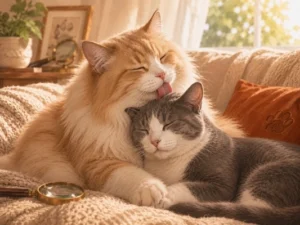
Why Does My Cat Lick Me Then Bite Me?
A cat that licks and then bites is not always being “mean.” This behavior can have several possible explanations.
Your cat may be playing. They may be overstimulated. They may be mixing grooming behavior with a gentle nibble. Or they may be telling you the petting session is over.
The important clue is intensity.
A soft nibble during relaxed cuddling is different from a hard bite with tense body language, growling, swatting, or repeated attempts to escape. If your cat regularly bites after licking, stop petting before the bite happens. Watch for the warning signs: tail movement, tense muscles, twitchy skin, flattened ears, or a sudden stare.
Do not punish your cat. Punishment can increase fear and stress. Instead, calmly pause interaction, give them space, and redirect future sessions with shorter petting windows.
Should I Let My Cat Lick Me?
Usually, occasional licking on intact skin is not a major concern for healthy adults. But use common-sense hygiene.
Wash your hands after licking, especially before eating. Avoid letting your cat lick your face, mouth, eyes, wounds, or irritated skin. Be extra cautious if anyone in the home is immunocompromised, very young, older, pregnant, or has medical devices that could be contaminated. The Washington Post’s expert-sourced health guidance notes that infection from pet licking is uncommon, but risk is not zero and is higher for more vulnerable people. (The Washington Post)
Also protect your cat. Do not let them lick topical creams, medicated products, essential oils, or cleaning residue from your skin.
In other words: the occasional hand lick is probably fine. The open-mouth face investigation? Case closed. Declined.
How to Stop Your Cat From Licking You
Maybe the licking hurts. Maybe it wakes you up. Maybe your cat has decided your forearm is a full-time grooming project.
You can discourage licking kindly without scolding or frightening your cat.
Redirect the Behavior
Offer a toy, treat puzzle, lick mat made for cats, or short play session. This gives your cat something better to investigate.
Calmly Move Away
When licking starts, gently remove your hand or stand up. Keep your reaction boring. If licking earns a big dramatic response, your cat may decide it works beautifully.
Avoid Rewarding the Licking
Do not offer food, petting, or excited attention immediately after licking if your goal is to reduce the behavior.
Build More Enrichment Into the Day
Bored or under-stimulated cats may seek attention in creative ways. Try daily interactive play, climbing spaces, scratching posts, window perches, food puzzles, and toy rotation. PetMD recommends environmental enrichment, vertical spaces, toy rotation, and daily interaction when licking may be related to anxiety, boredom, or attention-seeking. (PetMD)
Track the Pattern
Open the case notebook. When does the licking happen?
Before meals? During petting? At bedtime? After loud noises? When you wear a certain lotion? When another pet is nearby?
Patterns help you tell the difference between affection, habit, stress, and possible health concerns.
The Pet Detective Checklist: What Is Your Cat’s Licking Really Saying?
Before you declare the case solved, inspect the scene.
Ask yourself:
- Was my cat relaxed, purring, or kneading?
- Did the licking happen during petting?
- Did my cat bite afterward?
- Did I recently handle food?
- Am I wearing lotion, medication, perfume, or hair product?
- Is the licking new?
- Is it increasing?
- Is my cat also overgrooming themselves?
- Are there signs of stress in the home?
- Are there skin changes, appetite changes, or litter box changes?
A few cozy licks during cuddle time usually point to affection, grooming, taste, or attention. Constant, intense, or sudden licking points to a case that needs more evidence.
⚠️ When Should You Call the Vet?
Call your veterinarian if your cat’s licking is new, sudden, excessive, compulsive, or paired with other changes.
Important red flags include:
- Bald patches
- Red, irritated, or broken skin
- Scabs or sores
- Excessive self-grooming
- Vomiting or appetite changes
- Weight loss
- Litter box changes
- Hiding or unusual clinginess
- Increased aggression or fear
- Licking objects, fabric, plastic, or walls obsessively
- Licking one area of the body repeatedly
Your vet may check for skin problems, parasites, allergies, pain, gastrointestinal discomfort, stress-related behavior, or compulsive disorders. A certified feline behavior consultant or veterinary behaviorist may also help if medical causes are ruled out.
The Final Verdict
Most likely, your cat is bonding with you, grooming you, asking for attention, or investigating an interesting taste or smell. Sometimes, licking can also signal stress, overstimulation, or a health issue, especially when the behavior is excessive or new.
The best clue is your cat’s whole-body story. A relaxed cat giving a few gentle licks is probably sharing affection in their own sandpapery way. A cat licking constantly, biting afterward, or showing other changes may need help solving a deeper mystery.
Case conclusion: your cat’s tongue may be tiny, rough, and oddly determined, but it often says something simple.
You matter to them.
Just maybe wash your hands afterward.
Case File FAQs
Why does my cat lick me so much?
Your cat may lick you repeatedly because they are seeking attention, grooming you, self-soothing, or responding to stress. If the behavior is excessive or new, check with your vet.
Why does my cat lick me and purr?
Licking with purring often points to comfort, bonding, or affection. Still, look at the whole body language picture.
Why does my cat lick me then bite me?
Your cat may be overstimulated, playful, or signaling that they are done being touched. Stop petting and give them space.
Why does my cat lick my hair?
Your hair may feel groom-able, smell interesting, or remind your cat of social grooming. Be careful with hair products your cat could ingest.
Why does my cat lick my face?
Face licking can be affection, grooming, or curiosity about scent. Avoid letting your cat lick your mouth, eyes, or skin with products on it.
Is cat licking a sign of anxiety?
It can be. Occasional licking is usually normal, but frequent, intense, or compulsive licking may be related to stress, anxiety, or a medical issue.

Become a Junior Pet Detective
Get weekly pet mysteries, behavior clues, recall alerts, and detective-approved recommendations sent straight to your inbox.