
Case File #007
Why Does my Cat Sleep on my Chest?
📝 Case Summary
Case File #007: chest sleeping critter
Pet: Cat
Category: Behavior
Urgency Level: Usually Low
Main Suspects: being close to their loved one, your scent, rhythm of breathing
Vet Needed?: Sometimes
🔎 Quick Answer
In most cases, cats sleep on their person’s chest because it feels warm, safe, familiar, and comforting. Your scent, body heat, heartbeat, breathing rhythm, and closeness may all make your chest a prime nap location. For many cats, this behavior is a sign of trust and security. But as with all good investigations, context matters.
Full Case File 📂
Why Does My Cat Sleep on My Chest? The Cozy Case Explained
Your cat has options. There is the plush cat bed you bought with great optimism. There is the sofa. There is the laundry basket, which apparently has five-star resort status. There is also a perfectly good sunbeam that moves across the floor like nature’s heating pad.
And yet, when bedtime arrives, your cat chooses one very specific sleeping spot: your chest.
So, what is the evidence telling us? Is your cat declaring undying love? Stealing your warmth? Guarding you from invisible bedroom goblins? Or simply using you as a breathing, heartbeat-powered mattress?
Case file opened.
Let’s inspect the clues.
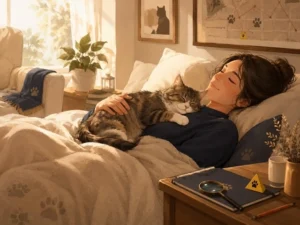
Why Does My Cat Sleep on My Chest?
Your cat may sleep on your chest because your body offers several things cats naturally seek in a resting spot: warmth, security, familiar scent, comfort, and closeness.
Cats often choose sleep locations that feel protected or cozy. VCA Animal Hospitals notes that cats may be drawn to snug or elevated spaces because they can feel secure and observe their surroundings. Cats also sleep a lot, often 12 to 16 hours a day, so their chosen nap locations can vary widely. (Vca)
Your chest may not look like a luxury cat bed to you, Detective Human, but to your cat, it may provide:
- Warmth
- Familiar scent
- A calming rhythm from your breathing
- The sound and vibration of your heartbeat
- Physical closeness
- A sense of safety
- Easy access to attention
In other words, your cat has examined the scene and found the evidence compelling: you are comfortable.
7 Reasons Your Cat Sleeps on Your Chest
1. Your Chest Is Warm
Cats are expert-level comfort seekers. They notice warm laptops, sunny windowsills, fresh laundry, and humans who foolishly lie still long enough to become furniture.
Your chest gives off steady body heat, which can make it especially appealing at night or in a cool room. International Cat Care recommends providing cats with comfortable bedding and notes that cats often gravitate toward areas with familiar scents. (ICatCare)
The clue here is simple: your cat may be choosing you because you are warm, soft, and conveniently located.
Case note: If your cat sleeps on your chest more during winter, chilly mornings, or when the house is cooler, warmth may be the prime suspect.
2. Your Heartbeat and Breathing May Feel Calming
Your chest is not just warm. It also moves gently as you breathe, and it carries the rhythm of your heartbeat.
For some cats, especially those who are very bonded to their people, this rhythm may feel soothing. This is not something we can prove for every cat, so it is best to say your heartbeat and breathing may be comforting rather than assuming it is always the reason.
Still, many pet parents notice their cats settle into deep, relaxed naps when they are close to the body. If your cat lies on your chest, purrs, kneads, and drifts off, the scene points toward comfort.
The tiny detective has found a lullaby. Unfortunately, it is your ribcage.
3. You Smell Familiar
Cats experience the world heavily through scent. Your smell is part of your cat’s map of home.
International Cat Care explains that familiar scent can matter in a cat’s environment, and bedding should not always be washed too aggressively because familiar smells can help cats feel settled. (ICatCare)
That means your chest, clothes, blanket, and bedding may all smell like “safe person” to your cat. If your cat rubs against you, kneads you, sleeps on your clothes, or curls into your side, scent may be part of the mystery.
To your cat, you may smell like home base.
4. Your Cat Trusts You
Sleep is a vulnerable state for cats. A cat who chooses to sleep on you is often showing that they feel safe in your presence.
This does not mean every cat who avoids chest sleeping dislikes their person. Cats have different personalities and comfort preferences. Some cats want full-body contact. Some prefer to sleep by your feet. Some supervise from across the room like a tiny landlord.
But if your cat regularly sleeps on your chest with relaxed body language, that is often a strong clue that your cat trusts you.
Look for signs such as:
- Loose, relaxed posture
- Slow blinking
- Soft paws
- Gentle purring
- Kneading
- Normal eating and litter box habits
- Choosing to return to you even after being moved
That is not random loafing. That is a vote of confidence.
5. Your Cat Wants Bonding Time
Some cats are social sleepers. They enjoy being near their people during rest, even if they are not constantly demanding attention while awake.
This can be especially true if you are busy during the day. Your cat may learn that bedtime is when you are finally still. No typing. No chores. No mysterious leaving through the front door. Just one available human-shaped mattress.
Chest sleeping can become part of your bond. Your cat may associate it with petting, warmth, calm, and togetherness.
The evidence: If your cat sleeps on your chest and also follows you around, greets you, rubs against you, or likes being nearby, this may simply be one of their ways of saying, “You are my person. Also, do not move.”
6. It Has Become a Habit
Cats are creatures of routine. If something works once, it may become part of the official household operating system.
Maybe your cat climbed onto your chest one night, you gave them a sleepy little head scratch, and the case was closed. Your cat learned: chest equals warmth, affection, and perhaps breakfast access at dawn.
Routine can explain why your cat sleeps on your chest every night. Once the behavior becomes rewarding, your cat may repeat it.
This does not mean your cat is manipulating you in a sinister way. Well, not entirely. It means your cat has made a successful behavioral discovery.
7. Your Cat Wants Attention or Reassurance
Sometimes, cats sleep closer to their people when they want reassurance. This may happen during changes such as:
- Moving to a new home
- A new pet in the household
- A new baby
- A change in your work schedule
- Visitors
- Loud weather
- Illness or aging
- Loss of another pet
In many cases, extra closeness during change is understandable. But sudden behavior changes are worth watching.
VCA notes that illness in cats may show up as changes in energy, sociability, appetite, litter box use, breathing, grooming, or overall appearance, and that sudden changes should alert cat parents to seek veterinary attention. (Vca)
So, if your normally independent cat suddenly becomes extremely clingy, sleeps on your chest constantly, cries more, eats less, hides, breathes differently, or changes litter box habits, it is time to call your veterinarian.
Not every clue is dramatic. But a good detective notices pattern changes.
Why Does My Cat Lay on My Chest and Purr?
If your cat lays on your chest and purrs, they are often relaxed, comfortable, or enjoying closeness. Purring commonly appears in content cats, especially when paired with soft body language.
However, there is one important twist in the case file: cats can also purr when stressed, uncomfortable, or unwell. Purring alone does not tell the whole story.
Your cat is probably relaxed if they are:
- Lying loosely rather than stiffly
- Slow blinking
- Kneading gently
- Purring softly
- Dozing or sleeping
- Eating normally
- Using the litter box normally
- Acting like their usual self
Call your vet if purring comes with:
- Sudden clinginess
- Hiding
- Appetite changes
- Weight loss
- Lethargy
- Breathing changes
- Vomiting or diarrhea
- Litter box changes
- Signs of pain
- New vocalizing at night
The purr is a clue. The full scene tells the story.
Why Does My Cat Knead and Sleep on My Chest?
Ah, the biscuit-making phase of the investigation.
Cats often knead when they are settling into a comfortable spot. Many cats knead blankets, pillows, soft furniture, or their favorite humans before resting. If your cat kneads your chest and then falls asleep, it may be part of their comfort routine.
The meaning is usually sweet. The claws, however, can be less poetic.
Try placing a soft blanket between your chest and your cat. This lets your cat enjoy the kneading ritual without turning your sternum into a crime scene.
You can also keep your cat’s nails trimmed or ask your vet or groomer to show you how to trim them safely.
Why Does My Kitten Sleep on My Chest?
Kittens may sleep on your chest because they are seeking warmth, security, and closeness. A new kitten adjusting to a home may find your body heat, scent, and presence reassuring.
This can be adorable. It can also require extra caution.
Very young kittens are small and fragile. If you are a deep sleeper, use heavy blankets, toss and turn, or worry you might accidentally roll onto your kitten, it may be safer to set up a cozy kitten bed nearby.
A good kitten sleeping setup may include:
- A soft bed close to you
- A warm, draft-free location
- A blanket with familiar scent
- Safe distance from hazards
- No loose cords or items they can chew
- Easy access to water and litter, depending on age and setup
The goal is not to reject the tiny detective. It is to give them a safe headquarters.
Is It Bad If My Cat Sleeps on My Chest?
Usually, no. If you and your cat are both comfortable, your cat sleeping on your chest is generally normal.
The behavior may even be a lovely sign that your cat feels bonded and secure. But there are times when chest sleeping may not be ideal.
You may want to discourage chest sleeping if:
- You have asthma, allergies, sleep apnea, or breathing issues
- Your cat is heavy enough to make breathing uncomfortable
- Your sleep is being disrupted
- Your cat scratches or startles when moved
- You are recovering from surgery or injury
- Your cat is a very young kitten
- You use heavy blankets that could trap your cat
- The behavior is sudden and paired with other changes
Your comfort matters too. A loving bond does not require sacrificing sleep, oxygen, or your last remaining inch of mattress.
What If I Don’t Want My Cat Sleeping on My Chest?
First, clear your cat of all criminal charges. They are not being bad. They have simply selected premium real estate.
The trick is to offer an alternative that solves the same mystery: warmth, scent, safety, and closeness.
Try these gentle redirects:
Offer a cozy nearby bed.
Place a cat bed beside your pillow, on a nightstand, or near your bed. Some cats want to be close, not necessarily on top of you.
Use a familiar-smelling blanket.
Because familiar scent can help cats feel secure, try placing a blanket or worn T-shirt in their bed. International Cat Care notes that familiar scents can be important in cat resting areas. (ICatCare)
Reward the preferred spot.
When your cat settles in their bed, offer praise, gentle petting, or a small treat if appropriate.
Redirect before they fully settle.
It is easier to move a cat before they become a fully committed chest loaf.
Create a bedtime routine.
Play, food, lights down, cozy bed. A predictable routine can help your cat understand where to settle.
Avoid punishment.
Yelling, pushing, or startling your cat can create stress and confusion. Calm consistency works better.
Your mission: make the new spot feel like a worthy rival to the human chest throne.
Why Is My Cat Suddenly Sleeping on My Chest?
A sudden change can have several explanations. Your cat may be responding to stress, cold weather, a household change, aging, illness, or a shift in your routine.
Ask yourself:
- Did anything recently change at home?
- Is the weather colder?
- Have I been away more often?
- Is my cat eating normally?
- Is my cat using the litter box normally?
- Is my cat more vocal, clingy, or restless?
- Is my cat hiding, limping, coughing, or breathing differently?
For senior cats, changes deserve extra attention. Cornell Feline Health Center notes that older cats may sleep more, gain or lose weight, become less active, or have trouble reaching favorite places, but pet parents should not dismiss health or behavior changes as “just old age” because they may point to medical issues. (Cornell Vet College)
If the only change is that your cat has discovered your chest during a cold week, the case may be simple. If chest sleeping arrives with other changes, your veterinarian should help investigate.
⚠️ When Should You Call the Vet?
When Should You Call the Vet?
Call your veterinarian if chest sleeping is new, intense, or paired with other signs that something may be wrong.
Watch for:
- Appetite changes
- Weight loss or weight gain
- Increased thirst
- Lethargy
- Hiding
- New aggression or irritability
- Increased clinginess
- Coughing or breathing changes
- Vomiting or diarrhea
- Litter box changes
- Limping or trouble jumping
- Signs of pain
- Confusion or disorientation in senior cats
- New nighttime vocalizing
VCA advises that sudden changes in cats can be a reason to seek veterinary attention, especially when changes involve energy, sociability, appetite, litter box use, breathing, or appearance. (Vca)
This article can help you understand common behavior clues, but it cannot diagnose your cat. When in doubt, let your veterinarian inspect the evidence.
The Final Verdict
Most likely, your cat has identified you as a warm, familiar, safe, comforting place to rest. Your scent says “home.” Your breathing creates rhythm. Your body heat provides cozy luxury. Your presence offers security. And if you occasionally provide chin scratches, well, that only strengthens the case.
Chest sleeping is usually normal, affectionate behavior. It can be one of those small, sweet ways your cat says, “I trust you.”
Of course, if the behavior is sudden, extreme, or paired with changes in appetite, energy, breathing, litter box habits, or personality, bring your veterinarian into the investigation.
Otherwise, case closed: your cat is not just sleeping on your chest.
They are sleeping where they feel safe.
FAQs
Why does my cat sleep on my chest every night?
Your cat may sleep on your chest every night because it has become a comforting routine. Your warmth, scent, heartbeat, and closeness may help your cat feel safe and relaxed.
Does my cat sleep on my chest because they love me?
Possibly. Cats show affection in different ways, and choosing to sleep on or near you often suggests trust, comfort, and social bonding. It may not be the only reason, though. Warmth, scent, and habit can also play a role.
Why does my cat sleep on my chest and neck?
Your chest and neck are warm, close to your scent, and near your breathing. Some cats also like these spots because they keep them close to your face and upper body, where they may feel especially connected to you.
Why does my cat lay on my chest and stare at me?
Your cat may be seeking attention, waiting for you to wake up, observing you, or simply resting while facing you. If their body language is relaxed, it is usually not concerning.
Why is my cat suddenly sleeping on me?
A sudden increase in sleeping on you may be linked to stress, household changes, colder weather, aging, illness, or a need for reassurance. Monitor for other changes such as appetite, litter box habits, energy, breathing, and vocalization.
Should I let my cat sleep on my chest?
It is usually fine if you are comfortable, your sleep is not disrupted, and there are no safety concerns. A nearby cat bed may be better for very young kittens, people with breathing issues, or anyone recovering from surgery or injury.
Why does my cat knead my chest before sleeping?
Kneading is often a comfort behavior. Your cat may knead your chest because they are settling in, feeling relaxed, or preparing to sleep. Use a soft blanket if their claws make the experience less charming.
Is my cat trying to dominate me by sleeping on my chest?
Dominance is usually not the best explanation for this behavior. Warmth, comfort, scent, trust, and habit are more likely reasons your cat chooses your chest as a sleeping spot.

Become a Junior Pet Detective
Get weekly pet mysteries, behavior clues, recall alerts, and detective-approved recommendations sent straight to your inbox.