
Case File #003
How to Get Dog Pee Smell Out of Carpet: Fresh & Old Stains
📝 Case Summary
Case File #003: The mysterious scent of pee
Pet: Dog
Category: Cleanup Lab
Urgency Level: asap
Main Suspects: puppy, recently active, payback
Vet Needed?: Sometimes
🔎 Quick Answer
To remove dog pee smell from carpet:
- Blot the urine immediately with paper towels or a clean cloth.
- Do not scrub, because scrubbing can push urine deeper into the carpet.
- Rinse lightly with cool water, then blot again.
- Apply a pet-safe enzymatic cleaner made for urine stains and carpet.
- Let the cleaner sit for the full time listed on the label.
- Allow the carpet to air dry completely.
- Vacuum the area once dry.
- Repeat if needed, especially for old or deep-set urine smells.
For old dog urine smell in carpet, you may need multiple enzyme treatments. If urine has soaked into the carpet pad or subfloor, professional cleaning or pad replacement may be necessary. Pet urine left unattended can damage carpet backing and layers, according to the Carpet and Rug Institute. (The Carpet and Rug Institute)
Full Case File 📂
How to Get Dog Pee Smell Out of Carpet
There it is.
You walk into the room, pause mid-step, and your nose files an immediate report: dog pee smell in the carpet.
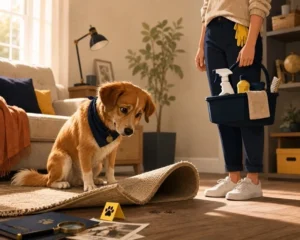
Maybe you saw the accident happen. Maybe the stain has vanished, but the odor keeps returning like a suspicious paw print at the scene. Either way, this is one mystery you want solved fast.
The best way to get dog pee smell out of carpet is to blot fresh urine immediately, treat the full depth of the accident with a pet-safe enzymatic cleaner, let the area dry completely, and repeat if the odor remains. Enzymatic cleaners are especially useful for pet urine because they help break down pet-waste odors rather than simply covering them up. (Humane World for Animals)
Let’s open the case file.
Why Dog Pee Smell Lingers in Carpet
The real culprit is not always the wet spot you can see. In many cases, the odor suspect has slipped below the surface.
Dog urine can soak into:
- Carpet fibers
- Carpet backing
- Carpet padding
- Subflooring beneath the carpet
Once urine dries, odor compounds can remain behind. Humidity, foot traffic, or incomplete cleaning can make the smell return later, even when the carpet looks clean.
That is why surface-level cleaning often fails. You may remove the visible stain, but the odor source is still hiding underneath like a criminal mastermind in a trench coat.
Pet urine can also weaken carpet layers and lead to backing separation if left untreated. The Carpet and Rug Institute notes that urine damage can vary depending on factors such as the urine’s makeup, the carpet material, and how long the urine remains in the carpet. (The Carpet and Rug Institute)
The case clue: to remove dog urine odor from carpet, you need to treat as deeply as the urine traveled.
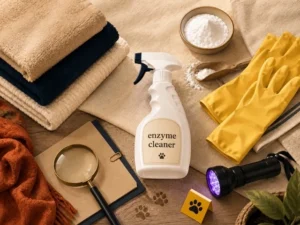
Supplies You’ll Need
Before you begin your odor investigation, gather your evidence kit.
You may need:
- Paper towels or clean absorbent cloths
- Cool water
- Pet-safe enzymatic cleaner
- Baking soda
- Vacuum
- Disposable gloves
- Blacklight flashlight, optional
- Wet/dry vacuum, optional
- Carpet-safe spot cleaner, optional
Choose a cleaner labeled for pet urine and carpet. Enzymatic cleaners are commonly recommended for pet messes because they help break down biological substances such as urine and feces. (PetMD)
Before using any cleaning product, test it on a hidden area of carpet first. Also keep pets away from treated areas until the carpet is fully dry and the product label says it is safe. The ASPCA warns that some household cleaning products can be harmful to pets, so pet-safe use matters. (ASPCA)
How to Remove Fresh Dog Pee Smell From Carpet
Fresh urine is the easiest case to solve. The faster you act, the less time the pee has to sink into the carpet pad.
Step 1: Blot, Don’t Scrub
Grab paper towels or a clean cloth and press firmly into the wet spot.
Blot from the outside of the stain toward the center. This helps keep the accident from spreading.
Avoid scrubbing. Scrubbing can rough up carpet fibers and push urine deeper into the carpet. Your goal is to lift the liquid, not rub it into hiding.
Step 2: Rinse Lightly With Cool Water
After blotting, pour a small amount of cool water over the area.
Do not flood the carpet. Too much water can spread the urine or soak the pad. Use just enough to dilute the remaining residue, then blot again with a fresh towel.
Repeat until your towel comes up mostly dry.
Step 3: Apply an Enzymatic Cleaner
Now bring in the main detective tool: the enzyme cleaner.
Apply the cleaner generously enough to reach the same depth as the urine. If the pee soaked below the surface, a tiny spritz will not solve the case.
Follow the product’s label exactly. Many enzyme cleaners need a specific amount of contact time to work properly. Some may need to stay damp for a while, while others should be blotted sooner.
Step 4: Let the Carpet Dry Completely
Odor can linger while the carpet is still damp, so wait until the area is fully dry before making your final judgment.
Keep your dog away from the spot while it dries. This prevents paw tracking, licking, or repeat marking.
Step 5: Vacuum the Area
Once the carpet is dry, vacuum thoroughly.
This helps lift the fibers and remove any dried residue. Then conduct the official sniff test.
Case closed? Excellent. Still suspicious? Move to the old-odor protocol below.
How to Get Old Dog Urine Smell Out of Carpet
Old dog urine smell is trickier because the evidence has had time to settle in.
The stain may be invisible. The smell may come and go. Your dog may keep returning to the same spot because their nose can still detect what yours barely can.
Here’s how to investigate.
Step 1: Find the Source
Start with the obvious clue: your nose.
Sniff around the room to narrow down the area. Check:
- Carpet corners
- Furniture legs
- Rug edges
- Hallway transitions
- Baseboards
- Areas near doors
- Spots where your dog has had accidents before
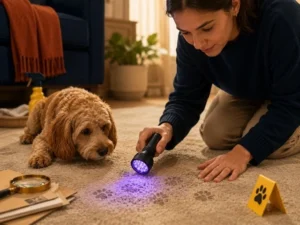
A blacklight can help reveal old urine stains in a dark room. Mark any suspicious spots with painter’s tape so you do not lose track of them.
Step 2: Rehydrate the Area Lightly
For old stains, the urine residue may be dry and concentrated. Lightly dampen the area with cool water, then blot.
Do not soak the carpet. The goal is to help loosen residue, not create a swamp under your floor.
Step 3: Apply Enzyme Cleaner Generously
Use enough enzymatic cleaner to reach the depth of the old urine.
This is where many pet parents accidentally under-treat. If the urine reached the carpet pad, a light surface spray will only freshen the top layer. Follow the label and give the cleaner enough time to work.
Step 4: Let It Work
Some enzyme cleaners need several hours or longer. Follow the instructions on your specific product.
Resist the urge to rush. This is the interrogation phase of the investigation. The enzymes need time with the suspect.
Step 5: Dry and Recheck
Let the carpet dry fully, then smell the area again.
If the odor is still present, repeat the enzyme treatment. Old urine may need more than one round.
Step 6: Call a Professional if the Smell Remains
If the smell keeps returning, the urine may have reached the carpet pad or subfloor.
At that point, professional carpet cleaning may help, especially if the cleaner offers pet urine odor treatment. In severe cases, the carpet pad may need to be replaced.
Does Baking Soda Remove Dog Pee Smell From Carpet?
Baking soda can help absorb mild lingering odors, but it is not the chief detective in this case.
Think of baking soda as the assistant who tidies up after the real investigation. It may help with leftover surface odor after you have cleaned the urine, but it does not replace an enzymatic cleaner for deep dog urine odor.
Here’s how to use it:
- Clean the area first with an enzymatic cleaner.
- Let the carpet dry completely.
- Sprinkle a light layer of baking soda over the area.
- Let it sit for several hours.
- Vacuum thoroughly.
Do not let your dog eat baking soda from the carpet. Keep pets out of the room while it sits, then vacuum carefully.
Does Vinegar Work for Dog Urine Smell?
Vinegar may help with some mild, fresh urine odors, but it is not the best solution for old or deep dog pee smell in carpet.
A diluted vinegar solution can help neutralize some odors in a pinch, but it does not work the same way as an enzymatic cleaner. Enzyme products are designed to break down biological messes like urine, feces, and vomit. (PetMD)
Before using vinegar on carpet:
- Spot-test it in a hidden area.
- Avoid soaking the carpet.
- Do not mix vinegar with commercial cleaners unless the label says it is safe.
- Avoid using vinegar as a substitute for enzyme cleaner on deep urine odor.
The verdict: vinegar may help with a minor fresh accident, but for stubborn dog pee smell, an enzymatic cleaner is usually the better bet.
What Not to Use on Dog Pee Smell in Carpet
Some cleaning suspects look helpful but make the case worse.
Avoid Ammonia-Based Cleaners
Dog urine already has ammonia-like odors as it breaks down. Using ammonia-based cleaners may leave a smell that encourages some dogs to pee in the same spot again.
Avoid Bleach on Carpet
Bleach can discolor carpet and may be unsafe around pets if misused. It is generally not the right choice for pet urine in carpet.
Avoid Steam Cleaning Before Odor Removal
Heat can make some stains and odors harder to remove. Use an enzymatic cleaner first, then consider professional carpet cleaning if needed.
Avoid Heavy Perfumes and Air Fresheners
Perfumes may cover the smell temporarily, but they do not remove the urine. To your dog’s much stronger nose, the original scent may still be there.
Avoid Harsh Products Without Pet-Safe Directions
Household cleaners, carpet powders, essential oils, and other products can pose risks to pets depending on the ingredients and exposure. The ASPCA specifically advises pet parents to be mindful of household cleaning agents around animals. (ASPCA)
When in doubt, choose a product labeled for pet messes and follow the directions closely.
How to Find Hidden Dog Pee Spots in Carpet
Sometimes the stain disappears, but the smell keeps filing anonymous complaints.
That means it is time to investigate.
Use the Sniff Test
Start where the smell is strongest. Move slowly around the room and check near corners, furniture, rugs, and walls.
Look for Discoloration
Old urine may leave yellowing, dull patches, or subtle texture changes in the carpet.
Try a Blacklight
Turn off the lights and use a blacklight flashlight to scan the carpet. Urine stains may glow under blacklight, though other substances can glow too. Treat it as a clue, not a final conviction.
Check More Than the Carpet
Dog pee can spread to:
- Baseboards
- Rug pads
- Furniture legs
- Curtains touching the floor
- Nearby throw blankets
- Carpet seams
The odor suspect may have accomplices.
When Dog Pee Smell Won’t Go Away
If you have cleaned the spot and the smell still returns, do not panic. This usually means the urine went deeper than the cleaning treatment.
Common reasons dog urine smell will not go away include:
- The urine soaked into the carpet pad.
- The stain is old.
- The spot has been peed on more than once.
- The cleaner did not reach deep enough.
- The enzyme cleaner did not sit long enough.
- The carpet dried too quickly.
- Humidity is reactivating the odor.
- The dog is returning to the same marked area.
Try another enzyme treatment and give it the full label-recommended contact time. If the smell still survives, call a professional cleaner and ask specifically about pet urine odor treatment.
General carpet cleaning is not always enough. You want someone who can address urine in the carpet, backing, and pad.
Why Your Dog Keeps Peeing on the Carpet
Now we turn from carpet detective to dog behavior detective.
If your dog pees on the carpet once, it may be a simple accident. If it keeps happening, there may be another clue to follow.
Possible reasons include:
- Puppy house-training accidents
- Not enough potty breaks
- Excitement urination
- Anxiety or stress
- Scent marking
- Senior dog incontinence
- A urinary tract infection
- Increased thirst or urination
- Mobility issues
- Cognitive changes in older dogs
- A lingering urine smell that draws your dog back
Sudden or frequent indoor accidents can sometimes point to a medical issue. Contact your veterinarian if your dog is peeing more often than usual, straining, having accidents after being reliably house-trained, drinking more water, showing discomfort, or if you notice blood in the urine.
Cleaning solves the carpet mystery. Your vet can help solve the “why now?” mystery.
How to Prevent Future Carpet Accidents
Once the odor is gone, your next mission is prevention.
Try these steps:
- Clean every accident thoroughly with an enzymatic cleaner.
- Block access to repeat accident spots while they dry.
- Take puppies and senior dogs out more often.
- Reward your dog for peeing outdoors.
- Keep a consistent potty schedule.
- Use washable rugs or waterproof pads during retraining.
- Clean dog bedding regularly.
- Avoid punishing accidents, which can increase stress.
- Talk to your vet about sudden changes.
- Work with a certified trainer or behavior consultant for marking, anxiety, or house-training struggles.
The key is to remove the scent, reduce the opportunity, and reward the right behavior.
⚠️ When Should You Call the Vet?
Call your veterinarian if the couch licking is sudden, intense, repetitive, difficult to interrupt, or paired with other symptoms. You should also call if your dog is licking multiple surfaces obsessively, drooling, swallowing repeatedly, vomiting, refusing food, acting painful, or trying to eat fabric.
A good rule of thumb: if the behavior feels out of character, investigate. You know your dog’s normal better than anyone. A quirky habit that has existed for years is different from a brand-new behavior that appears overnight.
Bring your licking log to the vet if you have one. Note when the licking started, how often it happens, what surfaces your dog licks, what food they eat, any recent diet changes, any cleaning products used, and whether there are other symptoms. These details help your vet separate behavior, stomach discomfort, dental issues, and other medical possibilities.
If your vet rules out medical causes, that is still valuable. It means you can focus confidently on anxiety, boredom, habit training, and environmental management. In detective terms, clearing a suspect is part of solving the case.
The Final Verdict
The best way to get dog pee smell out of carpet is to act quickly, blot instead of scrub, rinse lightly with cool water, and use a pet-safe enzymatic cleaner that can reach the full depth of the accident.
Baking soda may help with leftover surface odor, and vinegar may help in mild fresh cases, but enzyme cleaner is usually the true case-cracker for dog urine odor.
And if the smell keeps coming back? The urine may be hiding in the carpet pad, or your dog may be returning to the scene because the scent was never fully removed.
Follow the clues, treat the source, and when needed, call in backup from a professional carpet cleaner or veterinarian.
Mystery solved. Carpet rescued. Dog still adorable, despite being the prime suspect.
FAQs
How do you get dog pee smell out of carpet fast?
Blot fresh urine immediately, rinse the area lightly with cool water, blot again, then apply a pet-safe enzymatic cleaner. Let it sit for the full time listed on the product label and allow the carpet to dry completely.
What neutralizes dog urine smell in carpet?
Enzymatic cleaners are usually the best option for dog urine smell because they help break down pet-waste odors. Baking soda can help absorb mild leftover odor after the carpet has been cleaned and dried. (Humane World for Animals)
Will vinegar remove dog urine smell from carpet?
Diluted vinegar may help with mild fresh urine odors, but it may not fully remove old or deep dog urine smell from carpet. For stubborn odor, use a cleaner labeled for pet urine and carpet.
Why does my carpet still smell like dog pee after cleaning?
The urine may have soaked into the carpet pad, the cleaner may not have reached deeply enough, or the spot may need another enzyme treatment. Old and repeated accidents often require more than one cleaning.
Can professional carpet cleaning remove dog urine smell?
Professional carpet cleaning can help, especially when urine has soaked below the carpet fibers. Ask specifically for pet urine odor treatment, because standard carpet cleaning may not address urine in the carpet pad or backing.
Should I use steam cleaning on dog urine?
Avoid steam cleaning before treating the urine odor. Heat can make some stains and odors harder to remove. Use an enzymatic cleaner first, then consider professional help if the smell remains.
Is baking soda safe for dog pee smell?
Baking soda can help absorb mild odor after cleaning, but dogs should not eat it. Keep pets away while baking soda sits on the carpet, then vacuum thoroughly.
How do I find old dog pee spots in carpet?
Use your nose first, then inspect carpet corners, furniture legs, rug edges, and baseboards. A blacklight in a dark room may help reveal old urine spots, though it should be used as a clue rather than perfect proof.
Why does my dog keep peeing in the same carpet spot?
Your dog may still smell urine residue, or there may be a house-training, marking, anxiety, or medical issue involved. Clean the area thoroughly with an enzymatic cleaner and contact your veterinarian if accidents are sudden, frequent, or unusual.
Become a Junior Pet Detective
Get weekly pet mysteries, behavior clues, recall alerts, and detective-approved recommendations sent straight to your inbox.